Sunday, August 24, 2008

Cut Down By the Confederacy

By a stroke of dumb luck, our last stop before returning home from our vacation to North Carolina was Lexington, Virginia--the final resting place of both Robert E. Lee and Thomas "Stonewall" Jackson. Civil War buff that I am, I visited both graves and paid my respects to the fallen Confederate chieftains. Unfortunately, old Bobby Lee is entombed in a large brick chapel that is only open at certain times during the day. What is more, the neo-Rebs who care for his earthly remains forbid any unauthorized photography his sarcophagus. Such is life.

Jackson's grave is much more visitor friendly. It is the centerpiece of an old memorial cemetery named after the general. According to a small sign at its entrance, the cemetery remains open from "dawn to dusk." My dad and I paid our visit shortly after dawn...and, sure enough, it was open.

Stonewall's final resting place is as much a shrine to the South's glory days as it is a grave. Towering over the tombstones of Stonewall and various other Jacksons is a massive pedestal topped by a stalwart statue. At the base of the monument, modern admirers have left rebel flags as a tribute.

While I am, to a certain extent, an admirer of Stonewall Jackson, I could not help but think that the massive monument was more a nostalgic memorial to the so-called "Lost Cause" than to Jackson, himself. No monument great or small makes the man or his legacy. Stonewall's life--the good and bad of it--is the only monument that really matters in the long run.

Funny story, though: the spirit of Stonewall--or the ghosts of the Confederate dead lurking in this cemetery--must have sensed my cynicism. While stepping off of the Stonewall monument, I snagged my big toe on something and received a sizable wound. Another instance of a Southerner drawing Northern blood? Perhaps.

Friday, August 8, 2008

Free as Running Water...

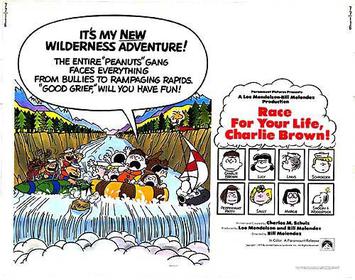
Today, my three-year-old and I watched one of the all-time greatest animated films ever: Race For Your Life, Charlie Brown! I remember watching this classic as a child, and it warms my soul to report that age has only improved it. Who cannot love a loser like Charlie Brown? Who cannot identify with his struggle to fulfill his destiny as a great summer camp leader?

In celebration of this great film, I'd like to reprint the lyrics of the film's theme song. In my opinion, it is one of the great forgotten classics.

It's a new day
We all can agree
That the sun shine's
Brought to you absolutely free

Free as running water
Fresh as morning dew
No matter who's the leader
When the sun sets down
It's gone Charlie Brown
So race for your life

Take a chance cause there's no second dance
Till it's a new day

I'll tell you a secret
You're about to face a test
And you'll have to do your best
Don't forget, just remember
Just remember, don't forget

Your life is free as running water
Fresh as morning dew
No matter who's the winner
If you try, we're behind you
Charlie Brown

Race for your life, Charlie Brown

By the way, if you haven't seen this movie, you can check it out in its entirety on YouTube. The first part is at http://www.youtube.com/watch?v=1JmqaMEbpSQ

Sunday, August 3, 2008

WALL-E and the Politics of the Heavy Hand

Art and politics have been going steady now for centuries, and their relationship will likely continue. Personally, I usually don't mind their coziness together; some of my favorite movies, novels, and songs have political undertones to them. But what irritates me is when political art abandons all attempts at subtlety (a feature I value highly in art) and becomes stultifyingly heavy-handed and (worse) preachy. Such art is the high school hallway make-out couple of its kind.

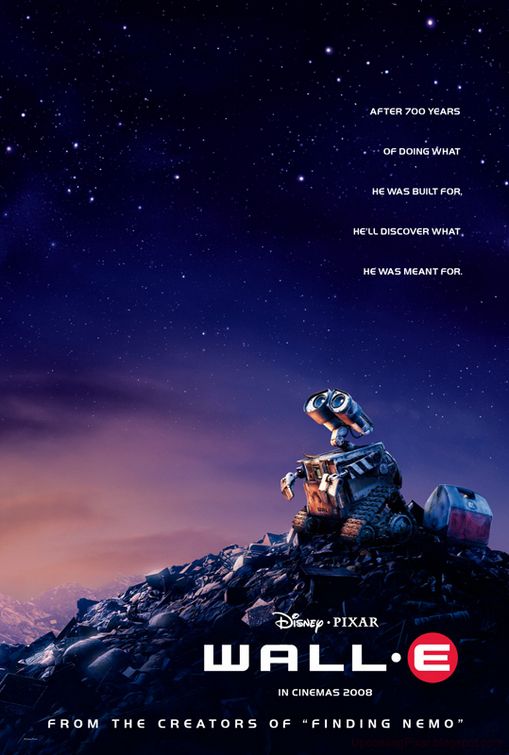
I've been thinking about the value of heavy-handed political art for about a month now. It began when I took my three-year-old daughter to WALL-E, Pixar's second self-indulgent adventure (the first being Ratatouille). I admit, the CG animation was great, the sound design was ingenious, and the robot love story was cute. But halfway through the film, the producers decided they had to start taking cheap (and ever trendy) shots at obesity and Bush Republicans (the phrase "stay the course" was used in regards to an inadequate national policy). To top it off, they turned the movie into another vehicle for the current celebrity cause, environmental preservation. The whole thing made me gag.

Don't get me wrong: I watched (and enjoyed) Al Gore's slide-show, and I'm all for saving the planet. I just bought a bike, for crying out loud! I even admire a nicely done political allegory. But I hate getting clubbed over the head time and time again--and WALL-E seems to take pleasure in wielding the club. Pixar needs to return to the subtlety of its previous works Monsters, Inc. and Cars, both of which carry environmentalist messages without self-indulgent melodrama and transparent political posturing.

The sad reality of the entertainment industry's infatuation with the environmental movement is that if going Green did not currently mean getting green (as in the greenback), then the environmentalist movement would be up a polluted creek without a paddle. Call me pessimistic, but I predict that Hollywood will soon find a new cause and Green art will go the way of all the other dead celebrity causes. We're not going to be the cause of this planet's destruction--Hollywood's fickle thirst for money will be.

In 1941, Preston Sturges filmed a comedy called Sullivan's Travels that was a brilliant "SHUT UP!" to those who criticized his films for not being political enough. In the film, he tells the story of a director who wants to make a politically important film, but keeps getting stuck making comedies. In the film, Sturges sends America an important message about poverty and compassion--but he also sends an important message to Hollywood: life is tough, and sometimes people just want to laugh. It a masterfully subtle work--and its one of my favorites. I'd recommend it along with I am a Fugitive from a Chain Gang and Mr. Deeds Goes to Town--two other powerfully political films from the same era that value subtlety over the club.

A heavy-handed message--even if the message is an important one--rarely stands the test of time. In twenty years, WALL-E will be the dinosaurs that Ferngully: The Last Rain Forest has become. It'll never become great classic. Fortunately, though, the entertainment industry is not interested in making classics with enduring environmentally-conscious messages. The only green they care about is the kind that doesn't grow on trees.

Friday, July 25, 2008

Five Songs That Have Gotten Me in Trouble

Here are five songs that I have had bad experiences with. I'm sure many more songs have gotten me in trouble, but these are the ones I remember best. If I remember some others, I'll let you know--provided this doesn't become a blogflop. Enjoy.

5. "I'm on Fire" (Bruce Springsteen)--It was my turn with the radio on a youth temple trip to Chicago, so I naturally popped a Bruce Springsteen mix tape into the cassette deck of my then-bishop's van. When the Boss started singing about his "little girl" and whether or not her "daddy" were home, the Bishop rightfully ejected the tape, despite my protests. One of the young women present, surprisingly, sprang to my defense and suggested that maybe the Boss really was talking about the father of the "little girl." The bishop didn't buy it, and the mix tape went back into my backpack. To this day, I've never felt entirely comfortable with that song...despite its catchiness and ridiculously funny music video.
4. "Joy to the World" (Isaac Watts)--Once, when I was probably four or five, my older brother and I were watching the original Star Wars movie and became particularly inspired by the scene where Luke, Han, Leia, and Chewbacca get stuck in the Death Star's trash compactor. We commenced singing--at the top of our voices--"JOY TO THE TRASH COMPACTOR!" to the tune of a certain Christmas hymn we knew from church. Within minutes, my mom (who probably doesn't remember this incident) was at the top of the steps, scolding us (at the top of her voice) for irreverently changing the words of a sacred song. We quit, but the trash compactor scene still brings a smile to my face.
3. "It's All Coming Back to Me Now" (Celine Dion)--When this song came out, it became the darling of stake youth dances. I once made the stupid mistake of telling a girl in the stake, who was at the time stalking me, that the song in question was good song to dance to with someone you liked, because it was so long. Well, when the next stake dance came along, guess who was at my side as soon as the song began. I danced with her, of course, but to correct my mistake, I acted like a jerk for the entire 7 minutes and 37 seconds of the song. She quit stalking me after that, and she has said very little to me since. In retrospect, I could have handled the situation a bit better...but I have never been very good at that sort of thing. Interestingly enough, the song was co-produced by Springsteen's piano player, Roy Bittan. I guess it does have some redeeming value.
2. "I've Just Seen a Face" (The Beatles)--I made the mistake of associating this song with a girl in my first post-mission English class. Without the aid of this song, I probably would have let my crush on the girl fizzle out under the weight of my personal insecurities and overall shyness around her. With the song constantly playing on my CD player, however, I became a bit too obsessive about the girl (it was just after my mission), and I got up the nerve to ask her out on a date. The date turn out to be the worst date I've ever been on, and I still feel embarrassed for myself when I think about it today. Funny story, though: a few years after our horrible date, she started working at the BYU Bookstore, where I was already working as a janitor. For the most part, I kept up my guard and managed to avoid crossing paths with her. One day, however, I found myself walking toward her in an empty hallway. She seemed to recognize me, and uttered a friendly "hello." I pretended not to see her, though, and kept on walking.
1. "The Piano Man" (Billy Joel)--When I was about eight or nine, my sister and I spent one afternoon making posters with the old Print Shop program on my family's first personal computer. For some reason--it was probably her idea--we created a poster of a big beer mug surrounded by the phrase "And the mike smelled like beer," which we stole from Billy Joel's classic song "The Piano Man" (substituting "mike" for "microphone" because neither of us knew how to spell "microphone" at the time). Stupid kids that we were, we made the mistake of printing the poster and leaving it sitting around. When my mom found it, she scolded us (and probably sent me to my room) for making a poster about something that could kill people. This incident left a lasting impression on both my sister and me. We still talk about it and relive the shame of that horrible poster.

Saturday, July 19, 2008

10 Words I Hate (But Occasionally Use)

Here are ten words I hate, but occasionally use. Let it be known, however, that I only use a few of these words for their humorous effect.

10. Luscious: A lousy word, especially when someone uses it to describe poetry.

9. Glance: On its own, "glance" is OK. Pair it with "quickly," though, and it becomes idiotic.

8. Delicious: When used to describe food, this word is permissible. However, "delicious" becomes an abomination as soon as anyone uses it to describe a non-consumable. Music, for example, is not delicious. Pizza, in some circumstances, can be.

7. Warmly: I think this is a dumb adverb.

6. Moisture: I've spoken my piece on this word already. I still think it is a curse upon the ears.

5. Melon: I hate both the sound of the word and the taste of the fruit. Who wants to eat something with a name that mimics the sound of someone throwing up?

4. Truly: Truly one of the most overused adverbs.

3. Amazing, Awesome, or Totally: Utah and the mish turned me off to these words. Also, for the record, "awesome" translated into the Portuguese "Otimo" doesn't make it any better.

2. Utilize: This word is for people who want to keep up with the intellectual Joneses. I prefer the unassuming everyman's "use."

1. Wealth or Wealthy: I don't like the way this word makes my mouth feel when I use it.

Wednesday, July 16, 2008

Mr. Wilberforce Goes to London: A Recommendation

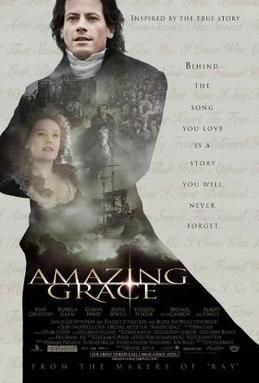
"Mainstream" Mormon cinema has neither produced a great film since 2004's Saints and Soldiers, nor a truly engaging and thought-provoking film since 2001's Brigham City. Evangelical Christian films--or at least those films marketed toward the Evangelical Christian demographic--have not fared much better. While I found the recent Chronicles of Narnia films--particularly Prince Caspian--excellent in almost every way, I thought 2006's The Nativity Story and The End of the Spear were dull, unimaginative, and relatively unengaging. Consequently, when I recently put 2006's Amazing Grace into my DVD player, I braced myself for another bad attempt at spiritual filmmaking.

As usually happens with me and my artistic pessimism, Amazing Grace proved me wrong. Not only is this film thought-provoking and inspiring (a word I use about as often as "amazing" or "breathtaking"), but it is quite entertaining. I highly recommend it. Unlike so many "spiritual" or "religious" films, it never slips into a maudlin piety or become overly hagiographic. In many ways, in fact, the films depiction of William Wilberforce's long struggle to abolish the British slave trade reminds of the David and Goliath-like storylines of Frank Capra's great Mr. Smith Goes to Washington and Mr. Deeds Goes to Town.

Amazing Grace, of course, is not without its problems. For example, some critics have suggested that the film could have given the efforts of blacks in the British abolition movement a more prominent place. While I am sympathetic to such criticism, I am reluctant to wholeheartedly accept it. The film, after all, is a biopic about Wilberforce, and not the whole of the British abolition movement. What is more, it does attempt to show the efforts of some blacks in the movement, specifically Olaudah Equiano. One of the most powerful moments in the film, in fact, occurs when Equiano, a former slave, takes Wilberforce on a tour of a slaveship.

Despite its problems, though, Amazing Grace is well worth the 118 minutes it takes to watch it. Give it a try.

Wednesday, July 9, 2008

Twilight of the Guffaws: A Review

The literary offenses of Stephanie Meyer are too numerable to account for in a review of this size. Her overuse of adjectives, adverbs, and crooked smiles is quite apparent to any seasoned reader, and this particular reviewer's opinion is that they--that is, the literary offenses--do not need additional exposure. Few would deny that Ms. Meyer is no Shakespeare. She is not even Edgar Allan Poe, who wears the laurels of America's best bad writer. Her writing--at least in her first novel, Twilight--is on a level higher up than, of course, internet fan fiction--but not that much higher.

I'm not here to quibble over Meyer's writing, though. It's bad, and everyone who reads her novels knows that. It is to Meyer's credit, however, that her writing can be so banal--and yet so entertaining. Yes, that's right. Meyer's writing is crap, but that doesn't stop you from turning pages. I am embarrassed and ashamed to admit it. I really am. In fact, I loath myself for not putting the book down after the second use of the adverb "frostily" (see pages 90 and 173). It will take some time before I can look myself in the mirror again.

Twilight is the story of Bella Swan, a seventeen-year-old geek magnet who can't walk three steps without tripping twice over her own feet. After moving to a perpetually rainy town in the American Northwest, Bella falls in love with Edward, a tortured, statuesque (not to mention "vegetarian") vampire who struggles to suppress his desire to eat Bella. Much of the novel is about the seemingly endless back-and-forth that occurs before this unlikely couple "hooks up," as kids these days like to say. Eventually, Bella and Edward engage in cliche high school romance: crooked smiles, kissing, cooing, love confessions, more crooked smiles, and, of course, tears. Finally, the novel ends with page-turning action and even a little blood spillage.

Not surprisingly, Twilight exhibits little originality; it is My So Called Life meets Dark Shadows on the set of Twin Peaks. And love stories between humans and vampires have been told before--remember Buffy and Angel?--and Bella and Edward bring little new to the table. So, why are people reading and enjoying Twilight? What makes it the popular success that it is? My wife suggests that the book attracts so many readers because Meyer nails the teenage girl psyche. Such an explanation makes sense, in many ways, although it hardly explains why I read (and [cough] enjoyed [cough]) Twilight. I mean, the book is really not my kind of love story (that is, neither lover dies in the end), and Meyer's monotonously bad writing style makes it difficult for me to read a page of it without guffawing two or three times.

Ultimately, I think I liked Twilight because...well, because I just liked it. That, perhaps, is Stephanie Meyer's greatest literary offense: she presents you with a horribly flawed novel (and let me drive this point home, folks, this novel is horribly flawed), and then compels you to like it for no other reason than that you JUST LIKED IT. The novel has too much gooey teenager romance (I don't recommend eating while you read this book--I gagged a few times), not enough violence (the novel's first-person point-of-view ultimately keeps the reader aloof from the story's most action-packed events), and definitely no terror (Bella's too tough of a protagonist to really be scared). But it has some charm, whatever that is.

Well, Stephanie Meyer can take her offenses to the bank. I am willing to bet that any sophisticated attempt to express admiration for this novel ends up sounding contrived and (WWSMS?) "excruciatingly" corny. Consequently, I'm going to quit embarrassing myself and draw this review to a close. I read the book. I liked the book--in spite of myself and my Masters Degree in literature. Those of you who wish to gloat about that fact, feel free. While you do, I'll be reading something tough and literary--so I can feel better about myself.
In fact, I've heard good things about some novel called New Moon...