 |
Tuesday, July 12, 2011
Holy Shattered Cityscape, Batman!
Tell me this isn't a cool movie poster. Now if only they had hired someone other than Anne Hathaway to play Catwoman...
P.S.--Sorry for the corny reference to the 1960s Batman series in my post title.


Friday, July 8, 2011
Tom, Huck, and Twain (Un-Shirted)
 Before this year, I had never finished a novel by Mark Twain. Don't get me wrong: I had tried before--at least six or seven times in the last decade--but I could never get to that last page. The closest I ever came was with A Connecticut Yankee in King Arthur's Court. I read about two-thirds of it, just enough to pass a quiz, and tossed it aside. Eventually, I sold my copy of it back to the university bookstore. Probably for two bucks and some change.
In a few weeks, though, my family and I will be visiting Hannibal, Missouri on our way to Branson, and I want to go there with at least some Twain titles in my quiver. I mean, I don't want to tell some pink-haired docent that I've never taken the time to read Tom Sawyer or Huckleberry Finn. That would be embarrassing. Like trying to talk football without knowing what a first down is.
So, I've been reading Twain--or, more accurately, listening to recordings of Twain's books. Two weeks ago I finished The Adventures of Tom Sawyer and I'm about halfway through Adventures of Huckleberry Finn. Sam Clemens willing, I'll be able to get my hands on a recording of Twain's recently released autobiography before hitting the road.
Of course, what has surprised me most about Twain is how entertaining his books are when you hear them read aloud. Admittedly, this should not have surprised me. Twain is, after all, known for being a regular nineteenth-century maroon. But, one of the things that has always bothered me about his writing are those endless, seemingly irrelevant tangents.
They wear a reader out.
Listening to them on CD, though, has been a whole new experience. Part of it, I'm sure, can be blamed on the A+ performance of the actor reading the book. But I'd also like to think that part of it is Twain himself. The guy was a genius for comedy, and I'm beginning to see his tangents--especially those in Huckleberry Finn--are instances where he's really flexing his comedic muscles.
But the tangents aren't the only aspect of his novels that I'm finding entertaining. I also like how he presents childhood in a grandly Romanticized way. Just the way I remember it. When Tom Sawyer gets into a fight with a new boy in town, for example, Twain tosses realism aside and casts it as the incomparable life-or-death struggle all childhood scrapes are in the minds of young combatants:
In an instant both boys were rolling and tumbling in the dirt, gripped together like cats; and for the space of a minute they tugged and tore at each other's hair and clothes, punched and scratched each other's nose, and covered themselves with dust and glory.Of course, the literary critic in me wants to say that passages like this one are just Twain's way of poking fun at Walter Scott and the popular melodramatic novels of his day. But the part of me that still remembers childhood wants to pat Twain on the back and tell him he got it all right.
So far, Adventures of Huckleberry Finn is shaping up to be just as good, if not better, than Tom Sawyer. Of course, it's hard to compare the two books since they differ so much in style, tone, and content. By far, Huckleberry Finn is the most interesting character in The Adventures of Tom Sawyer, and Twain did well to write Huckleberry Finn in the first person. For one, it gives us the unfiltered musings of Huck, who lacks his friend's Romanticism. Huck sees and feels things with a clearer eye and deeper emotions than Tom. Notice, for instance, the maelstrom of feelings that come to him as he witnesses the tragic end of the Grangerford and Shepherdson feud:
All of a sudden, bang! bang! bang! goes three or four guns--the men had slipped around through the woods and come in from behind without their horses! The boys jumped for the river--both of them hurt--and as they swum down the current the men run along the bank shooting at them and singing out, "Kill them, kill them!" It made me so sick I most fell out of the tree. I ain't a-going to tell ALL that happened--it would make me sick again if I was to do that. I wished I hadn't ever come ashore that night to see such things. I ain't ever going to get shut of them--lots of times I dream about them.
I stayed in the tree till it begun to get dark, afraid to come down. Sometimes I heard guns away off in the woods; and twice I seen little gangs of men gallop past the log store with guns; so I reckoned the trouble was still a-going on. I was mighty downhearted; so I made up my mind I wouldn't ever go anear that house again, because I reckoned I was to blame, somehow. I judged that that piece of paper meant that Miss Sophia was to meet Harney somewheres at half-past two and run off; and I judged I ought to told her father about that paper and the curious way she acted, and then maybe he would a locked her up, and this awful mess wouldn't ever happened.
When I got down out of the tree I crept along down the river bank a piece, and found the two bodies laying in the edge of the water, and tugged at them till I got them ashore; then I covered up their faces, and got away as quick as I could. I cried a little when I was covering up Buck's face, for he was mighty good to me.That's heavy stuff. In these three paragraphs, Huck experiences disgust, regret, fear, guilt, sadness, and gratitude. It's a emotional gamut that Twain executes in an entirely believable way, totally devoid of the tongue-in-cheek emotionalism of Tom Sawyer. And it's part of why Huckleberry Finn is so good.
So, like I said, I'm hoping that readings these books will make it so I don't come across as a total newb in front of the pink-haired docents in Hannibal. Not that I care that much about what museum docents think about me. I just don't want to be one of those tourists who shows up thinking Mark Twain was a country singer or Colonel Sanders' older brother.
And if I do end up sounding like a newb, I'll just toss my pretensions aside and ask them what the heck the deal is with Twain's shirtless picture. I mean, seriously, it's not like they had Facebook back then.
Sunday, June 26, 2011
Dork Shirts
Dork shirts. Every guy has one.

I've had three in my life, unless you count the shirt I wore on the first day of kindergarten. It was royal blue with the word "BREAKIN'" emblazoned across the front in white puffy letters. I didn't have any break-dancing skills back then, but I wore it anyway with significant pride.
But that was before I knew what a dork was, so it probably doesn't count. Besides, it's one of those things that's dorky in retrospect, which also kind of disqualifies it from the running.
 I purchased my first real dork shirt in 1994 in a Civil War bookstore in Nags Head, North Carolina. It was a gray XL t-shirt with the face of Union Colonel Joshua Lawrence Chamberlain centered within a circular gold frame flanked by Union and Confederate flags. At the time, I was in the middle of a serious Civil War phase, which had been inspired by both Ken Burns and the overly-long 1993 film Gettysburg. Chamberlain is a larger-than-life character in that film. Real hero material. I thought it would be cool to have a t-shirt with his face on it.
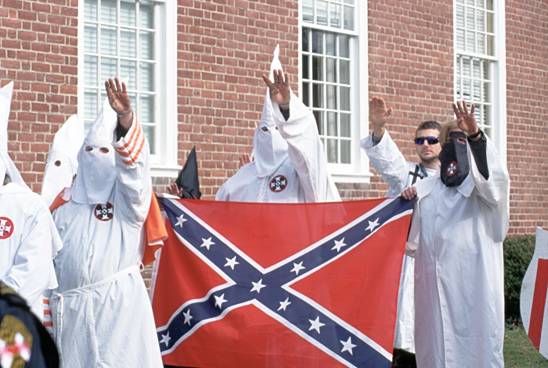
So I bought it, but never wore it in public. I kind of realized how dorky it was, and I was a little uncomfortable with wearing something with the Confederate flag on it. I didn't want anyone thinking I was, you know, racist. But I also didn't want to throw it away. So, I kept it in at the bottom of my t-shirt drawer. It's still there today.
 My second dorky t-shirt had a caricature of Leo Tolstoy on it. I bought it at a Half Price Bookstore in 1997. I was a senior in high school and thought of myself as a kind of teenage champion of the working class. Bruce Springsteen music was the soundtrack of my life. I wore work boots and lots of denim everywhere I went. Tolstoy's peasant look gave off the right kind of vibe. What did it matter that I had only read 1/8th of War and Peace and nothing of Anna Karenina?
I'm not sure what happened to the Tolstoy shirt. I remember wearing it a few times to school and no one ever beat me up. Probably because they thought I was wearing a Santa Claus shirt.
Or they didn't give a crap.
Anyway, I probably threw the shirt out when I went to college. I was really into art back then, so it's possible that it got too stained with paint and India ink.
 Yesterday I bought my most recent dork shirt. I was at Kohl's looking for a "cool" shirt when I came across a tan t-shirt with several Marvel Comics characters on it. It was pretty fly and on the discount rack ($4.00!). I grabbed it without hesitation. More than one cashier told me I got a great deal.
When the midnight showing of Captain America: The First Avenger rolls around, I know what I'll be wearing. Cap himself figures pretty prominently on the shirt. I'll be the envy of dorks everywhere. A real-life true believer.
Of course, I'm not sure how often I'll wear my Marvel Comics t-shirt. In reality, I'm not much of a t-shirt kind of guy anyway, especially when I wear pants. And my wife has already told me that I can't wear it with khaki shorts--apparently, tan shorts with a tan shirt looks lame--so that leaves me with a lot fewer options.
Dork shirts, I guess, are made to be bought and stuffed into drawers until dorky things like midnight movie premieres, Civil War reenactments, or comic book conventions make them socially acceptable to wear. That's fine with me. I get a kick out of buying them, not wearing them. Besides, I'm not really the kind that needs a t-shirt to proclaim his dorkiness. I do that well enough on my own.

I've had three in my life, unless you count the shirt I wore on the first day of kindergarten. It was royal blue with the word "BREAKIN'" emblazoned across the front in white puffy letters. I didn't have any break-dancing skills back then, but I wore it anyway with significant pride.
But that was before I knew what a dork was, so it probably doesn't count. Besides, it's one of those things that's dorky in retrospect, which also kind of disqualifies it from the running.
 I purchased my first real dork shirt in 1994 in a Civil War bookstore in Nags Head, North Carolina. It was a gray XL t-shirt with the face of Union Colonel Joshua Lawrence Chamberlain centered within a circular gold frame flanked by Union and Confederate flags. At the time, I was in the middle of a serious Civil War phase, which had been inspired by both Ken Burns and the overly-long 1993 film Gettysburg. Chamberlain is a larger-than-life character in that film. Real hero material. I thought it would be cool to have a t-shirt with his face on it.
So I bought it, but never wore it in public. I kind of realized how dorky it was, and I was a little uncomfortable with wearing something with the Confederate flag on it. I didn't want anyone thinking I was, you know, racist. But I also didn't want to throw it away. So, I kept it in at the bottom of my t-shirt drawer. It's still there today.
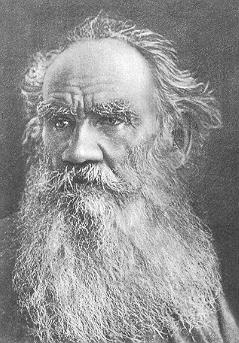
I'm not sure what happened to the Tolstoy shirt. I remember wearing it a few times to school and no one ever beat me up. Probably because they thought I was wearing a Santa Claus shirt.
Or they didn't give a crap.
Anyway, I probably threw the shirt out when I went to college. I was really into art back then, so it's possible that it got too stained with paint and India ink.
 Yesterday I bought my most recent dork shirt. I was at Kohl's looking for a "cool" shirt when I came across a tan t-shirt with several Marvel Comics characters on it. It was pretty fly and on the discount rack ($4.00!). I grabbed it without hesitation. More than one cashier told me I got a great deal.
When the midnight showing of Captain America: The First Avenger rolls around, I know what I'll be wearing. Cap himself figures pretty prominently on the shirt. I'll be the envy of dorks everywhere. A real-life true believer.
Of course, I'm not sure how often I'll wear my Marvel Comics t-shirt. In reality, I'm not much of a t-shirt kind of guy anyway, especially when I wear pants. And my wife has already told me that I can't wear it with khaki shorts--apparently, tan shorts with a tan shirt looks lame--so that leaves me with a lot fewer options.
Dork shirts, I guess, are made to be bought and stuffed into drawers until dorky things like midnight movie premieres, Civil War reenactments, or comic book conventions make them socially acceptable to wear. That's fine with me. I get a kick out of buying them, not wearing them. Besides, I'm not really the kind that needs a t-shirt to proclaim his dorkiness. I do that well enough on my own.
Sunday, June 19, 2011
Kindle This, Dear Reader...

Then, this past month, I read my first e-book using my PC's Kindle. The reason I went digital rather than paper was a matter of necessity. The book, Nephi Anderson's Dorian, is a rarity in Ohio. I really had not other choice.
And this is what I found out: you can do a lot with an e-reader.
Basically, everything I hate about serious reading is made easier on the Kindle. For instance, I hate writing notes in small margins. On the Kindle, though, I have unlimited note-taking space. Big words are also a problem. When reading a low-tech book, I get annoyed whenever I have to pull the dictionary out to look up a word I don't know. On the Kindle, definitions are a click away.
I understand this goes against my predilections for all things old. But I'm never been a pure techno-phobe. I like technology when it makes my life better. I'm going to miss paper when it's gone. But I'm not going to miss the annoyance of a dictionary search. Sure, some people like looking words up in the dictionary. And I admit the dictionary makes great bathroom reading. But, really, its not a task I'll ever get sentimental about when its gone.
Ultimately, I still prefer paper books. For me, they are easier to skim. And I like the pleasure of flipping pages and reading random passages. I also like having a tangible object with the weight of 637 pages on its back.
But e-readers are pretty cool.
Especially when it comes to old big books, like Moby Dick, that take up a lot of space on the bookshelf. I mean, I like having my walls lined with books and bookshelves, but I don't necessarily want my books taking over my living space any more than they already have.
But I think its great that e-readers and websites like www.gutenberg.org and www.archive.org are making nineteenth century texts more accessible to the tech-savvy masses. Already I've downloaded nearly all of the 19th century texts I need to read for my Ph.D. qualifying exams to my PC's Kindle. All for free.
Of course, I think old school books are on the way out. In one hundred years, they'll have gone the way of the typewriter and rotary phone.
That's not to say that neo-posthipsters won't still be printing them up as artsy novelty items in 2111. But the folks in the e-reader industry have done a really good job reinventing the book.
Friday, June 10, 2011
Got Grit?: A Review of the History Channel's "Gettysburg"

This Memorial Day, the History Channel broadcast a new two-hour documentary on the battle of Gettysburg. According to its official website, the film is supposed to "[strip] away the romanticized veneer of the Civil War to present the pivotal Battle of Gettysburg in a new light--a visceral, terrifying and deeply personal experience, fought by men who put everything on the line in defense of their vision of the American future."
Tell me that's not high ambition.
Since I don't don't have the History Channel, I learned about this film belatedly through Civil War Memory, a frequently cranky Civil War blog I follow. Its take on the film was decidedly negative, but I wanted to watch it all the same. I mean, I write a lot of reviews of things, but I rarely pay attention to reviews myself. Plus, I've been interested in the battle of Gettysburg since my first visit there as a kid. I've been back to it several times since then, including a week-long visit for my honeymoon, and I am always amazed at how much of it is still new to me.
(Yes, my wife--who is not a Civil War buff--actually agreed to honeymoon in Gettysburg! That's love, folks!)
I had the opportunity to watch the film last night as my family and I house-sat for my in laws. (We got to watch it on their massive big screen TV--which I have found makes even lousy movies good.) Of course, I didn't quite know what to expect from the film. I hadn't seen too many promos about it, but everything I had read on it mentioned how realistic and gritty it was supposed to be. I guess I had high expectations about it.
Also, the fact that it had Ridley and Tony Scott attached to it as executive producers didn't lower the bar any. I half expected Russell Crowe to show up and lead a charge.
Sadly, Gettysburg is a disappointment. In general, I'm not a fan of History Channel documentaries, because they tend to take the flashy, sexy approach to history. When it comes to priorities, their primary one is to entertain, not inform. I admit that this isn't necessarily a bad approach. I just like my documentaries to do both. (Or, if they're meant merely to entertain me, I want them to have goofy storylines involving ghosts or cryptids.)
One of my main problems with Gettysburg is its panel of authorities. Like most documentaries of this kind, it brings in several personalities who are supposed to provide expert insight into the battle. With the exception of James McPherson, I had never heard of any of them. Most of them, it seemed, came not from universities, but from non-academic Civil War organizations. It also featured a few authors of popular history and maybe one or two teenagers.
Everyone gestured a lot. One guy had spiky blond hair. A passionate few even seemed more enthusiastic than Dora the Explorer on speed. I'm surprised none of them jumped out of the TV screen and grabbed me by the collar.
The overall production value on the film was also lower than I expected it to be. I've been to a few Civil War reenactments in my day, and this film was definitely a step or two above the typical reenactment. But this film still had the feel of of a bunch of good ol' boys playing dress up. I guess I wanted to feel like I was watching a real battle with this film. But that didn't happen. A "visceral, terrifying and deeply personal experience" it was not.
That said, this film did like its wounds. About every two minutes there was a close-up of a bullet striking flesh. Always with a lot of blood splatter. I think the filmmakers were trying to show what it really looked like to get shot during the Civil War. By drawing attention to it time and time again, though, they ended up doing just the opposite. It was like watching the same special effect over and over again, but from different angles.
I had a few other problems with the film. With only a two-hour time frame, it had to leave a lot of the battle out. I think its overview of the second day of the battle was particularly inadequate. To do the battle justice, though, the film would have had to run at least six hours. Of course, that's the sort of thing you can do on cable television. Three two-hour episodes over the course of three nights. A History Channel Premiere Event.
But I guess the budget didn't allow for that. The cost of fake blood must have gone up.
I also didn't learn anything new from the film. Aside from the grittier-than-usual recreations of the battle, which really weren't that gritty, Gettysburg seemed no different from any other History Channel documentary. Overall, the story it presented was too basic, too bare-bones. Originality wasn't one of its virtues. Nor did it change how I thought about the battle.
Which is too bad because I was really hoping that it would.
Note: You can now watch Gettysburg online at http://www.history.com/shows/gettysburg/videos/gettysburg#gettysburg.
Wednesday, June 8, 2011
Filling the Void...
I'm starting Fenimore's Ghost to fill a void left by The Low-Tech World when it became my soapbox for all things Mormon fiction.
Back in the day (i.e. up until last year), I used to write a blog that was more eclectic in nature. I'd write reviews of movies, non-Mormon books, tourist attractions, and the like. I'd also write up some witty social commentary now and again. I had fun with it.
The problem with The Low-Tech World 1.0, though, was that it didn't really attract readers. It's random sampler approach to blogging, I guess, kept it from finding a consistent audience.
Not so with The Low-Tech World 2.0. Newly focused, it has a following I'm pleased with.
Still, I miss the random sampler approach. I'm a guy with interests that go beyond Mormon fiction. I want this blog to reflect that.
That said, I want to rein in the focus a little on Fenimore's Ghost. Rather than trying to tackle everything, I want to focus the blog as much as possible on the weird ways the twenty-first century collides with the nineteenth. It's one of those things I think a lot about. I always try to keep at least one eye open for books, movies, reenactments, historical sites, and tourist attractions that take on the 1800s.
Of course, if something not related to the nineteenth century comes up, and its interesting enough to write about, I won't hesitate to post it.
Enjoy.
Sunday, January 2, 2011
Best and Worst Reads of 2010
It's a new year, so I again need to sum up my reading experience of the past year. In 2010, I read 54 full length works. Included in the count are novels, short story collections, non-fiction books, plays, and screenplays.
Although I have included them in the count, some books are texts that I have read before. I have not considered them for my best and worst list since they are already among my favorites and have been numbered on lists past.
Here are my lists. I present them with no justification. If you would like to argue for or against any of them, please feel free to do so in the comments section. I doubt this will happen, of course, but the option remains open.
Five Best Fiction Books:
1. Ethan Frome--Edith Wharton
2. Long After Dark--Todd Robert Petersen
3. Mrs. Dalloway--Virginia Woolf
4. Tinkers--Paul Harding
5. Song of Solomon--Toni Morrison
Five Best Non-Fiction Books:
1. Blue Latitudes--Tony Horwitz
2. The Joseph Smith Papers: Journals, Vol. 1, 1832-1839
3. Evolution: The Remarkable History of a Scientific Theory--Edward J. Larson
4. A Short History of Nearly Everything--Bill Bryson
5. Hooligan: A Mormon Boyhood--Douglas Thayer
Five Worst Books:
1. March--Geraldine Brooks
2. Abraham Lincoln: Vampire Hunter--Seth Grahame-Smith
3. Breaking Dawn--Stephenie Meyer
4. The Guinea Pig Diaries--A. J. Jacobs
5. Of Mice and Men--John Steinbeck
Subscribe to:
Posts (Atom)